In the wake of Erik ten Hag’s dismissal and Ruud’s departure, we find ourselves at a familiar yet precarious junction. Despite optimism under Ruud we still lie in 13th place, and the conclusion of the Ten Hag era marks yet another chapter in United’s post-Ferguson struggles.
As the club turns to Sporting CP’s Ruben Amorim, the question emerges: Will the young Portuguese innovator fare any better in English football’s most unforgiving spotlight?
In the first of this two-part series we take a look at everything Ruben Amorim. The second part will focus on the bigger picture at Manchester United.
The Ten Hag Legacy: A Mixed Bag
Ten Hag’s tenure, while not without its bright spots, ultimately succumbed to the club’s persistent challenges. He delivered the first silverware in many years and oversaw a watershed ownership transition. Despite providing stability through various turbulence, including the Ronaldo, Greenwood, De Gea and Sancho sagas, the team’s performance issues proved insurmountable.
The statistics paint a stark picture of United’s attacking impotence. 26 big chances created in the Premier League, with an astounding 22 missed. An 85% failure rate that leads the division. More tellingly, United have the largest negative differential between expected goals and actual goals scored, managing just 8 goals from an xG of 14.6.
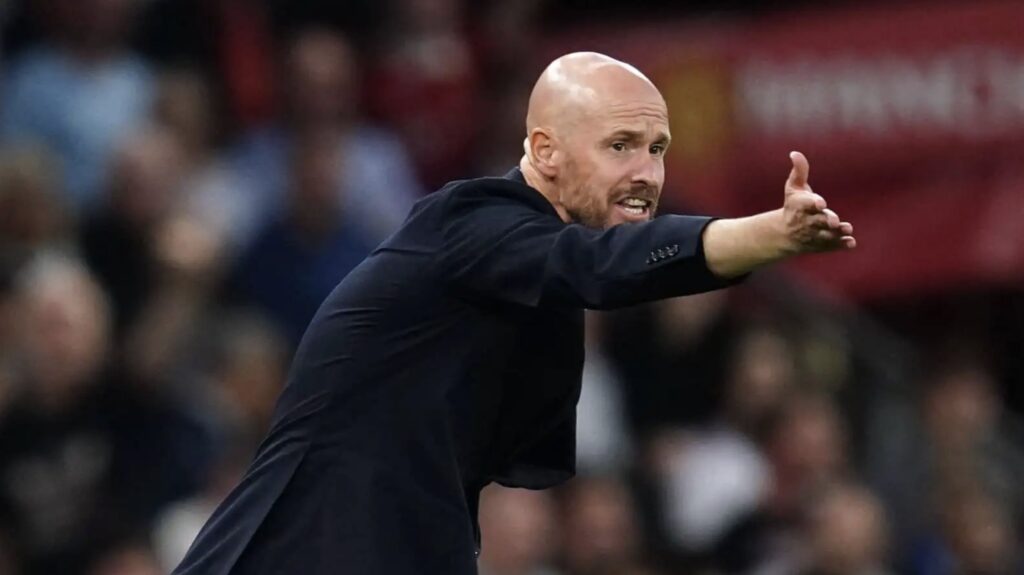
While Ten Hag’s tactical setup often created opportunities through structured play, the execution remained woefully inadequate. The manager’s job is to set the team up to create chances and limit the opposition’s opportunities. If you look at the West Ham gam, you’ll see he did that. Yet, who but the players themselves can put the ball in the net?
FA Cup victory over City will remain a highlight along with the breakout of Mainoo and Garnacho, while his selection drama and tactical rigidity lost him his fans.
The Amorim WAY: winning mentality, adaptability, youth development and data science
Ruben Amorim emerges as an intriguing solution to United’s predicament. His credentials at Sporting CP are compelling, after delivering their first league title in 19 years with a record points tally and an impressive 32-game unbeaten run. His teams maintain an authoritative 61.4% average possession across 110 games, combined with a stingy defence, conceding just 0.89 goals per game last season. He reportedly rejected Liverpool and was in detailed talks with West Ham before staying put in Portugal last season.
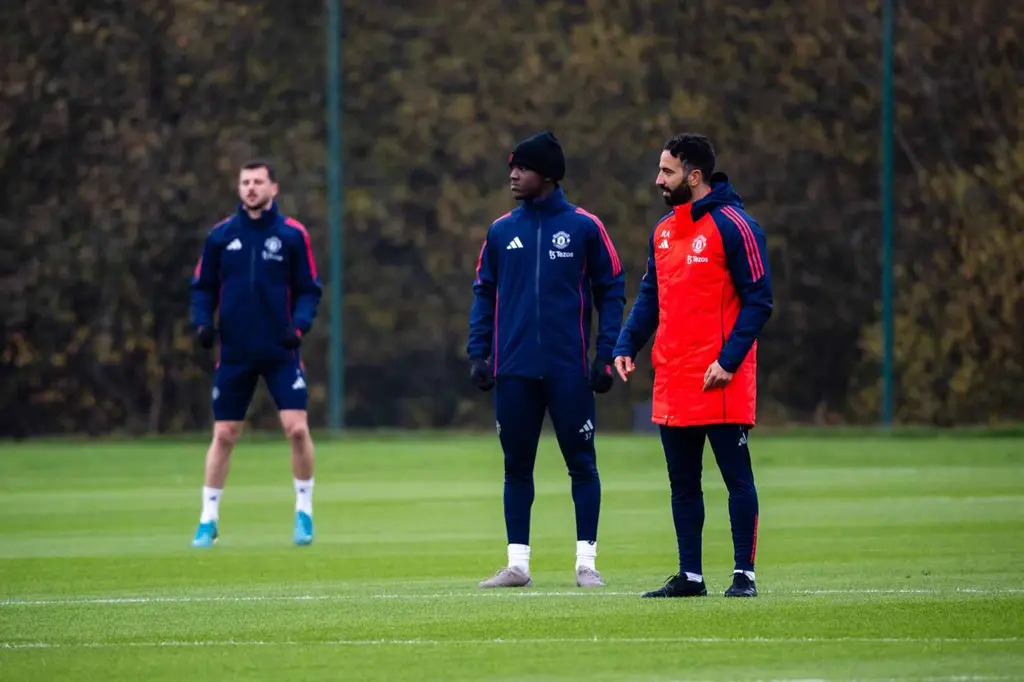
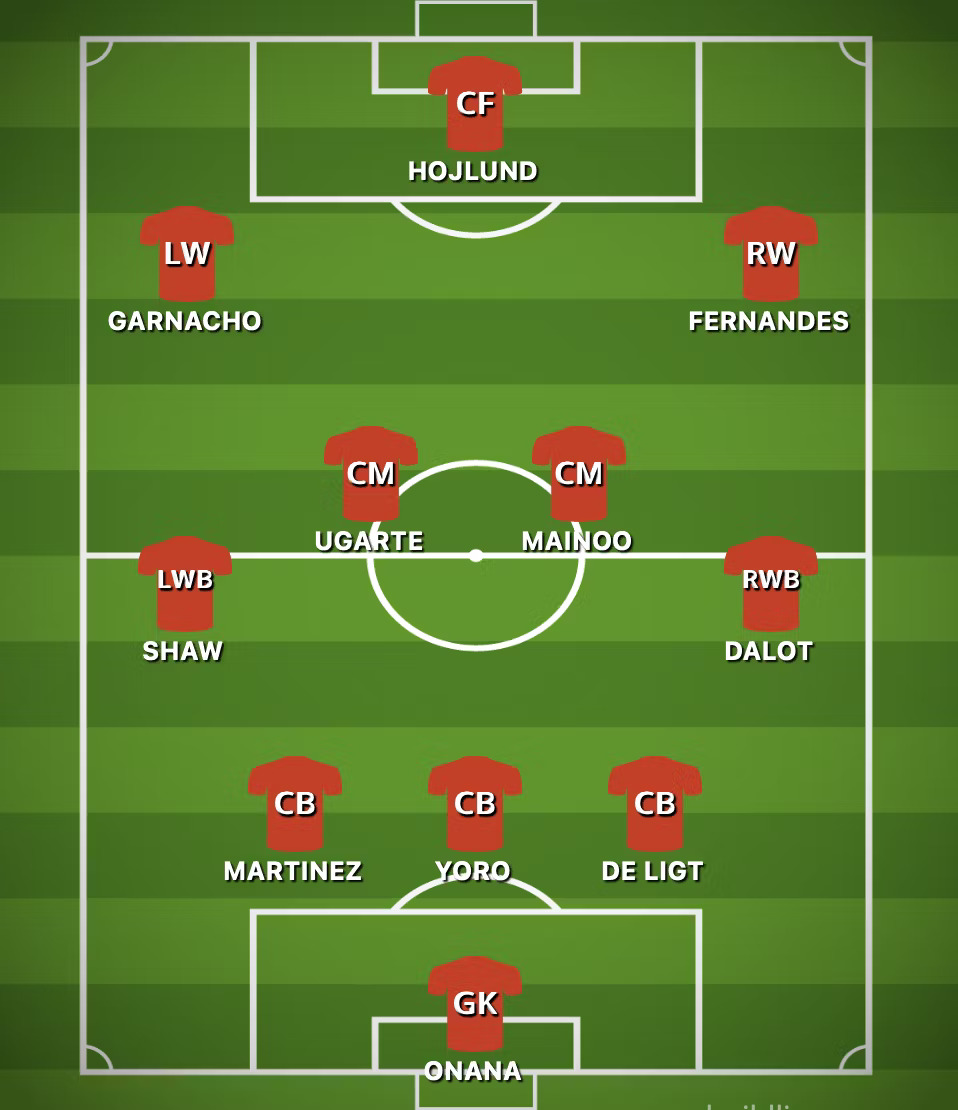
His preferred 3-4-3 system, as displayed in the footage of his inaugural training session, could translate intriguingly to United’s current squad by potentially lining up Marinez, de Ligt and Yoro as the back 3, and it’s worth noting that Manuel Ugarte starred for Amorim at Sporting before moving to PSG.
More important is his his tactical flexibility; demonstrated by a successful switch to 4-2-3-1 when faced with injuries to several key players. Its successful implementation, with a 64% win rate, offers a stark contrast to Ten Hag’s perceived rigidity. This adaptability, coupled with his data-driven approach led to a 20% reduction in player injuries at Sporting, and aligns perfectly with INEOS’ emphasis on modern methods. Imagine what 20% fewer injuries could mean to United. Sharper, faster and more available players.
TACTICS AND STRATEGY
Amorim employs a dynamic 3-4-3 structure with a back 3 and versatile wingbacks, to control possession, maintain defensive stability and create fluid attacking options.
Teams employing these types of systems have often over-performed versus expectations.
Chelsea under Conte and Tuchel, Nuno’s Wolves, Xabi Alonso’s spectacular Bayer, Inter Milan’s Inzaghi team, Nagelsmann’s Leipzig, Chris Wilder’s classic Sheffield United, Thomas Frank’s Brentford and Gasperini’s Atalanta. All these sides punched above their weight consistently, exercising control on the pitch.
Ruben brings this trademark compact back 3 high line, with a single pivot midfielder for recycling possession and covering for wingbacks that have pushed up. There’s also a box-to-box midfielder running in with width and flexibility from wingbacks; stretching the defence of opposition creating space in the centre.
The real challenge will be for him to churn out goals from our struggling forward line. He could either go with a pair of 10s, for example Bruno and Mount, or more traditional wingers. These could be paired with a lone striker, or we might play with two inside forwards and a false 9 who could drop in deep, or some other combination of these options.
Warning Signs and Historical Echoes
However, the parallels with Ten Hag’s appointment are uncomfortably familiar. Both arrived with impressive win ratios from smaller leagues. Ten Hag’s 73.49% at Ajax mirrors Amorim’s 71.73% at Sporting. Both achieved domestic success with traditionally strong clubs in less competitive environments. For example, Ten Hag in his second last game at Ajax had won 5-0 with a 58% possession and 4.12 xG. 18 total shots with 7 on target creating 7 big chances with an 85% pass efficiency. These numbers are scarily similar to Sporting’s performances under Amorim so be advised, cautious optimism is the way to go.
Moreover, Amorim’s tenure at Sporting hasn’t been without turbulence. After a fourth-place finish in his third season, he reportedly told sporting director Hugo Viana he wanted to leave, feeling his project had failed. Early in his tenure, he nearly quit after just two losses before gravitating to his back three system.
The challenge facing any incoming manager at United runs deeper than tactical acumen. When comparing United’s performance to matches like Arsenal-Liverpool, the gulf in quality across all facets becomes apparent. While rivals can rely on unlikely scorers stepping up in big moments and capitalize on set-pieces, United struggle to leverage such opportunities.
United have appointed the right man in Ruben Amorim. But make no mistake about – the young Portuguese may well just have accepted one of the most difficult jobs in world sport.