

Thomas Tuchel’s unmoving preference for a starting midfield ensemble of Declan Rice, Elliot Anderson, and Jude Bellingham is hardly surprising. The trio offer a complimentary blend of athleticism, technicality, and industry that few other nations can boast. It will take some doing, therefore, should Kobbie Mainoo wish to disrupt this settled core, and yet the past warns us never to rule him out.

Despite the soaring heights reached by the Stockport product in his short career so far, Mainoo’s progress has been far from linear.
The 2024 Euros in Germany marked the conclusion and climax of a stellar breakout season for Mainoo, who was experiencing a trajectory at the time only comparable with Lamine Yamal in terms of the growing excitement associated with his promise. The pair would finish first and second in that year’s Golden Boy rankings, with the Spaniard pipping Mainoo to the award largely on account of his nation’s triumph over England in the Euros final.
What made that summer all the more remarkable was how unlikely his involvement had seemed at the outset. Named in Gareth Southgate’s squad having barely completed a full season of top-flight football, Mainoo began the tournament on the periphery before forcing his way into the starting eleven for the knockout rounds. He started the semi-final against the Netherlands and the final against Spain, and looked entirely at home on both occasions, bringing a composure and craft to England’s midfield that few of his more established teammates could offer.

That he has been unable to recapture that status under Tuchel speaks less to any decline in his own abilities and more to the settled nature of the midfield now ahead of him.
Ruben Amorim: A cautionary tale
Within the space of a season, the Carrington graduate from one of the first names on the team-sheet under Erik Ten Hag, to being deemed surplus to requirements by the Dutchman’s successor, who built his side around a rigid 3-4-3 formation that left little room for a midfielder of Mainoo’s profile. Amorim voiced his adamance that Mainoo and Bruno Fernandes were competing for the same position, and therefore could not be paired together in a midfield two.

The former Sporting Lisbon boss felt as though Mainoo lacked the athletic and defensive qualities to partner Fernandes, instead opting for either Casemiro or Manuel Ugarte, nor was he likely to play ahead of Fernandes, United’s captain and most important player.
Ruben Amorim’s refusal to adapt his methods to incorporate Mainoo into his side was a sword the Portuguese head coach was willing to die by, but the six months that followed would brutally highlight the error in his ways. Michael Carrick’s arrival as United’s interim head coach in January brought a dramatic change in Mainoo’s fortune, as he was immediately reinstated as a vital member of United’s starting eleven.
After accumulating just 380 minutes during Amorim’s tenure, Mainoo would go on to play 1,822 minutes under Carrick in the remainder of the 25/26 season. With Mainoo on the field, United would win 67.9% of their games, compared with a shocking 10% without – a pattern Tuchel would do well to bear in mind.
England’s low-block headache
The combined transfer fees of the trio that have started in all of England’s World Cup games so far, based on their most recent moves, stands at £337.5 million including add-ons, making it the most valuable midfield unit of any nation at the World Cup by some distance.
There’s a reason their respective clubs were each willing to pay in excess of £100m for their services. All three possess outstanding qualities that make them among the best at what they do, be that Rice’s lung-busting ground coverage, Anderson’s relentless forward passing or Bellingham’s game-breaking attacking quality. With that said, England’s games against Ghana and Panama exposed a recurring struggle to break down a side happy to sit deep.

England’s second group stage fixture against Ghana was the starkest example. The Black Stars held Tuchel’s men to a goalless draw after 90 minutes of fruitless toil, setting up in the deepest defensive block England faced across the group stage. The issue was not a lack of possession or territory, with England dominating both, but a lack of patience, disguise and delicacy required to unlock a side committed to soaking up pressure and hitting the opposition on the break.
Rice, Anderson and Bellingham thrive when the game is stretched, with gaps to run into and space to exploit in behind, the opposite of which was true against Ghana. What the trio seemed to lack in that moment was a midfielder capable of receiving the ball in the tightest of pockets and manipulating a defensive line through subtlety, as opposed to power.
Entering the knockout-phase, the problem lingered on. DR Congo, despite being overcome 2-1 courtesy of Harry Kane’s brace, defended in a similarly disciplined shape and England’s central progression was again laboured. For long stretches Kane was isolated, the ball going sideways or backwards through a midfield unable to find a way through the centre of the pitch. The result flattered the performance, and raised further concerns as Tuchel’s side look to progress to the deeper stages.
The Case for Mainoo
There are few midfielders in England’s squad as comfortable as Kobbie Mainoo receiving the ball under pressure with their back to goal, escaping the attention of two or three opposing players in congested areas, and finding the simple forward pass. The fact that Mainoo’s game revolves so much around close combination play and small carrying bursts with the ball makes him an ideal solution for dismantling teams who put emphasis on being compact in the middle of the pitch and minimising the space the opposition can exploit.
During the 2024 Euros, Mainoo finished with the highest passing accuracy of any player at the tournament, misplacing just five of 138 attempted passes, a success rate of 96%. His semi-final display against the Netherlands in Dortmund was perhaps the clearest illustration of what those numbers look like in practice.
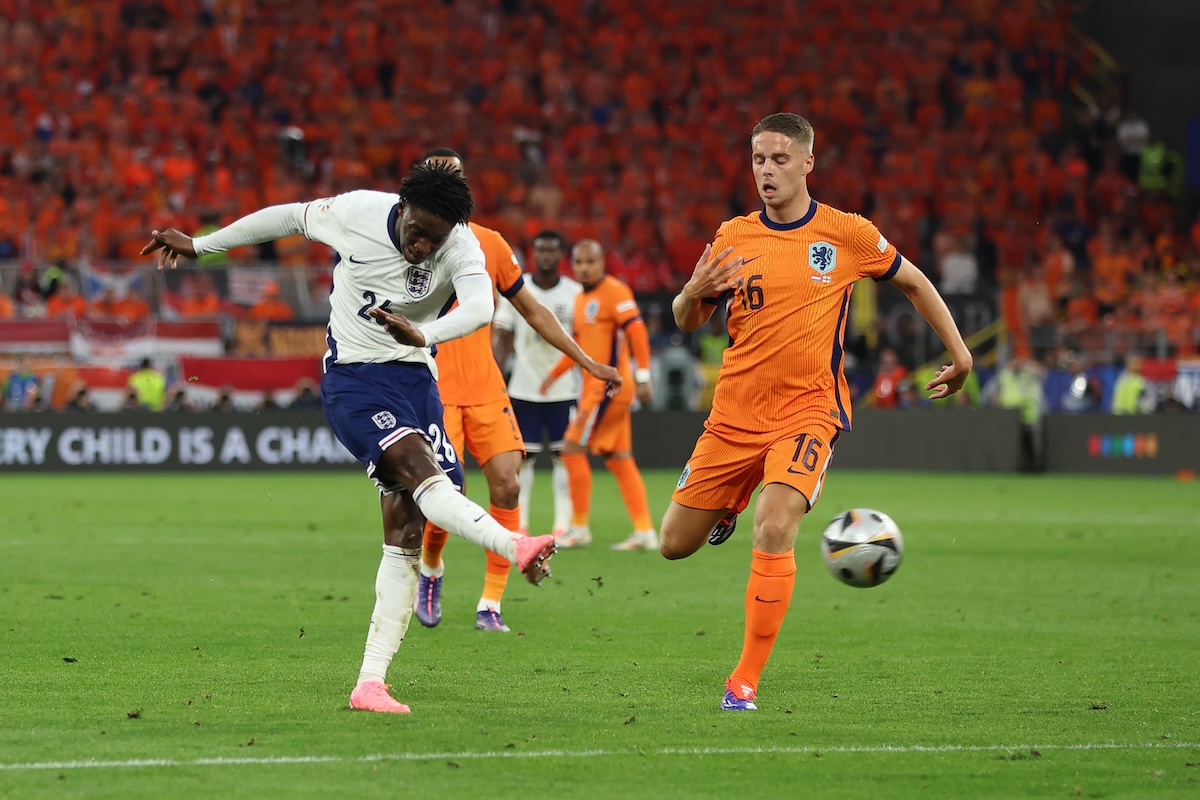
Playing as the youngest England player ever to feature in a major tournament semi-final, he was the calmest presence in an England side that, until that point in the tournament, had often looked anxious in possession. Where others hurried, Mainoo took an extra touch. One driving run ended with a shot blocked by Nathan Ake after he nicked the ball off Cody Gakpo; another found Phil Foden in a position to force a clearance off the line from Denzel Dumfries.
After a number of futile attempts to find a midfield partner for Declan Rice that summer, including experiments which saw Trent Alexander-Arnold and Reece James trialed in midfield, Gareth Southgate had finally achieved the balance England were looking for in pairing Rice next to Mainoo. The United star has already shown he can perform for the Three Lions on the biggest stages, something that cannot yet be said for Elliot Anderson.
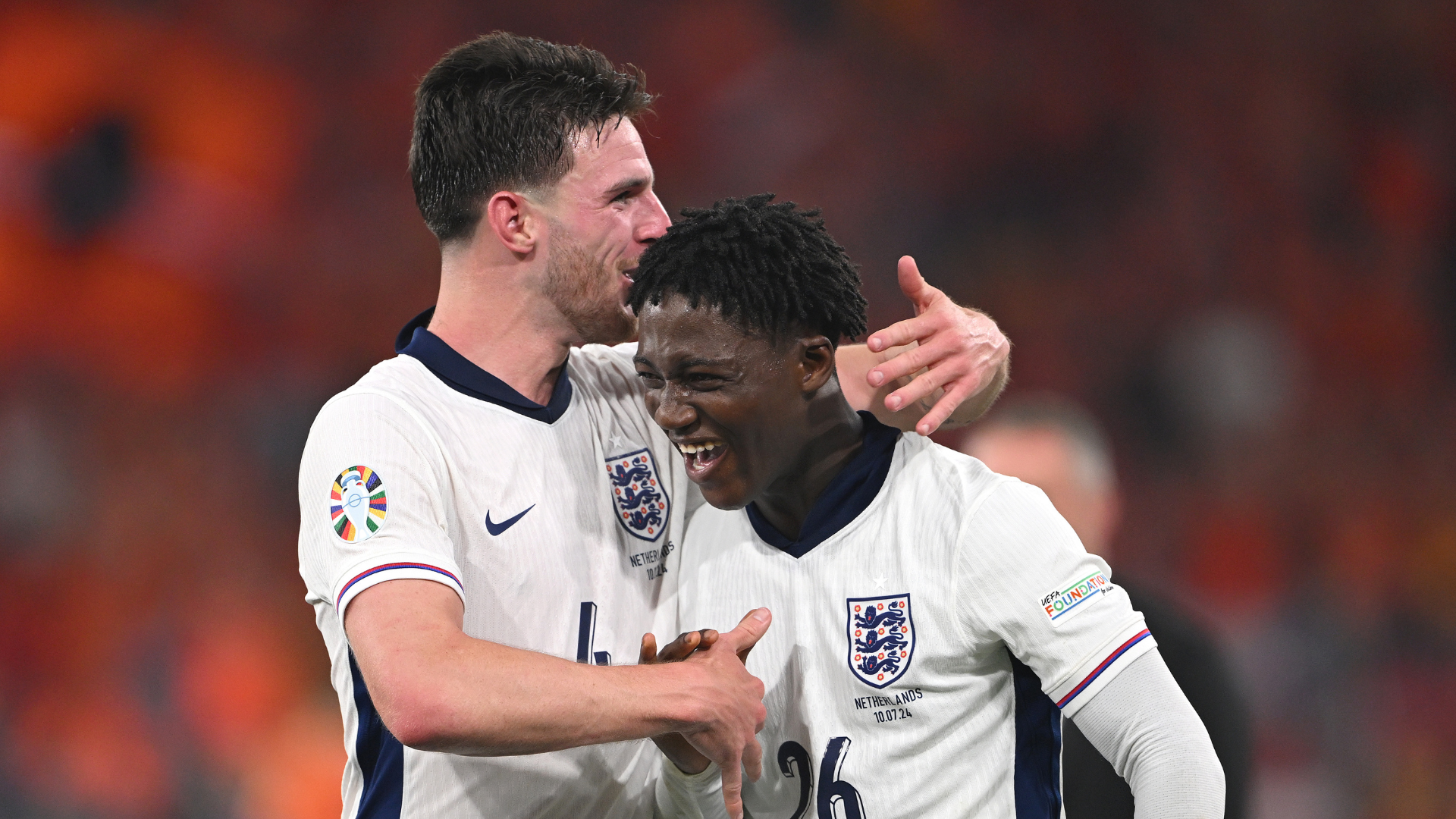
Perhaps the simplest and most convincing argument in Mainoo’s favour is that he has a habit of producing when it matters most. A 97th minute winner against Wolves at the Molineux in February 2024 announced him as a player unafraid of the occasion, and that knack for showing up in decisive moments has followed him ever since. His goalscoring portfolio includes stunning strikes against Liverpool, a stoppage time clincher against Lyon in Europe, and most tellingly, an emphatic FA Cup final finish against fierce rivals Manchester City, helping to secure his first piece of major silverware in a United shirt.
As for concerns surrounding his athleticism, Mainoo may not possess the mind-bending ground-covering ability of a Declan Rice, but by no means is he a slouch defensively. The midfield partnership of Mainoo and Casemiro that formed under Michael Carrick towards the season’s close was an undeniably crucial factor in United’s upswing in form. Oftentimes Mainoo would be the deeper of the two out of possession, screening the back four and blocking passing lanes, while his Brazilian compatriot operated as more of a disrupter higher up the pitch, in a similar way that both Elliot Anderson and Declan Rice do to great effect at club level. Both Mainoo’s understanding of the defensive elements of the game and his physical execution of tackles and duels have improved markedly in recent months.
The challenge ahead
Harry Kane’s saving brace against DR Congo was just enough to edge England into the last 16, but the draw has now handed Tuchel a fixture that brings the Mainoo question to the foreground. England travel to Mexico City to face the tournament co-hosts at the Azteca on Monday, kick-off 1am BST, a venue at which Mexico have never lost a World Cup match.
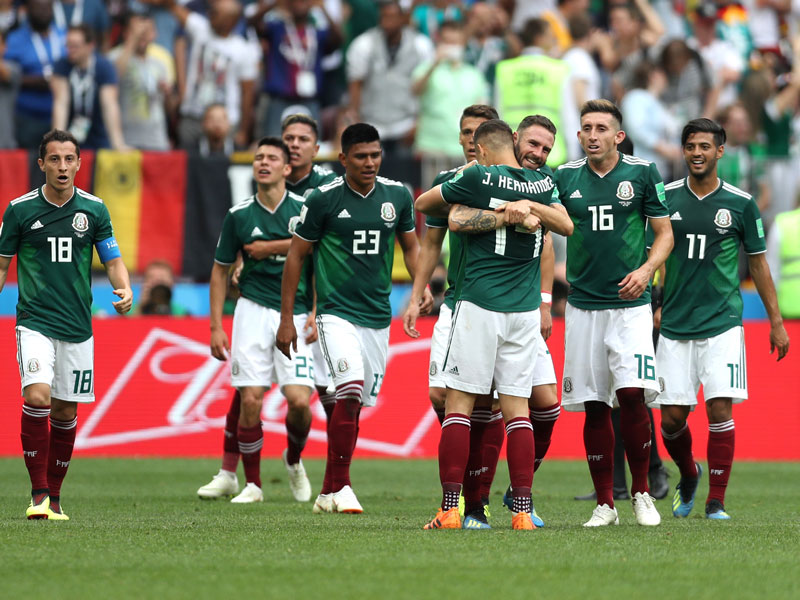
Javier Aguirre’s side beat Ecuador 2-0 in the round of 32 and arrive with momentum, a ferocious home crowd behind them, and the tools to hurt an England side who aren’t yet firing on all cylinders. They are capable of being aggressive in the opening exchanges, but Aguirre has shown throughout this tournament that he is also willing to drop into a deep, compact defensive block when the occasion demands it.
Rice, Anderson and Bellingham remain a defensible starting point, and no case for Mainoo justifies dismantling that trio from the off. The Azteca, however, poses a different question to the ones England have already answered this tournament, and Mainoo may be best equipped to answer it.
Related posts:
 Nottingham Forest vs Manchester United: The Preview
 Tottenham 2-2 United: Reds Rescue Last-Gasp Point in Chaotic Clash
 Crystal Palace vs Manchester United: The Preview
 Manchester United vs Bournemouth: The Preview
 Arsenal vs Manchester United: The Preview
 Manchester United vs Nottingham Forest: The Preview
 What Tynan Thompson Brings To Manchester United
 How JJ Gabriel became Manchester United’s Youngest Ever Player
 Manchester United Advancing in Talks to Sign Leicester City Midfielder Louis Page