

After several targets pursued, vetoed, and missed-out-on, Manchester United have agreed their second deal of the summer transfer window, bolstering Michael Carrick’s midfield for next season with the surprise addition of Chelsea’s Andrey Santos.
A deal for the 22-year-old progressed rapidly, moving from loose reports of interest, to a full agreement within the space of 48 hours. The pace at which the deal was completed may speak to United’s growing desperation to salvage what has yet been an underwhelming window.
The Brazilian midfielder is understood to be undergoing medical tests before completing his move to Old Trafford for a reported £48 million, with an additional £2 million in achievable add-ons. The fee will divide opinion, but overall represents fair value with sums paid for similar targets in mind, and given the inflation that increasingly plagues the transfer market year upon year.
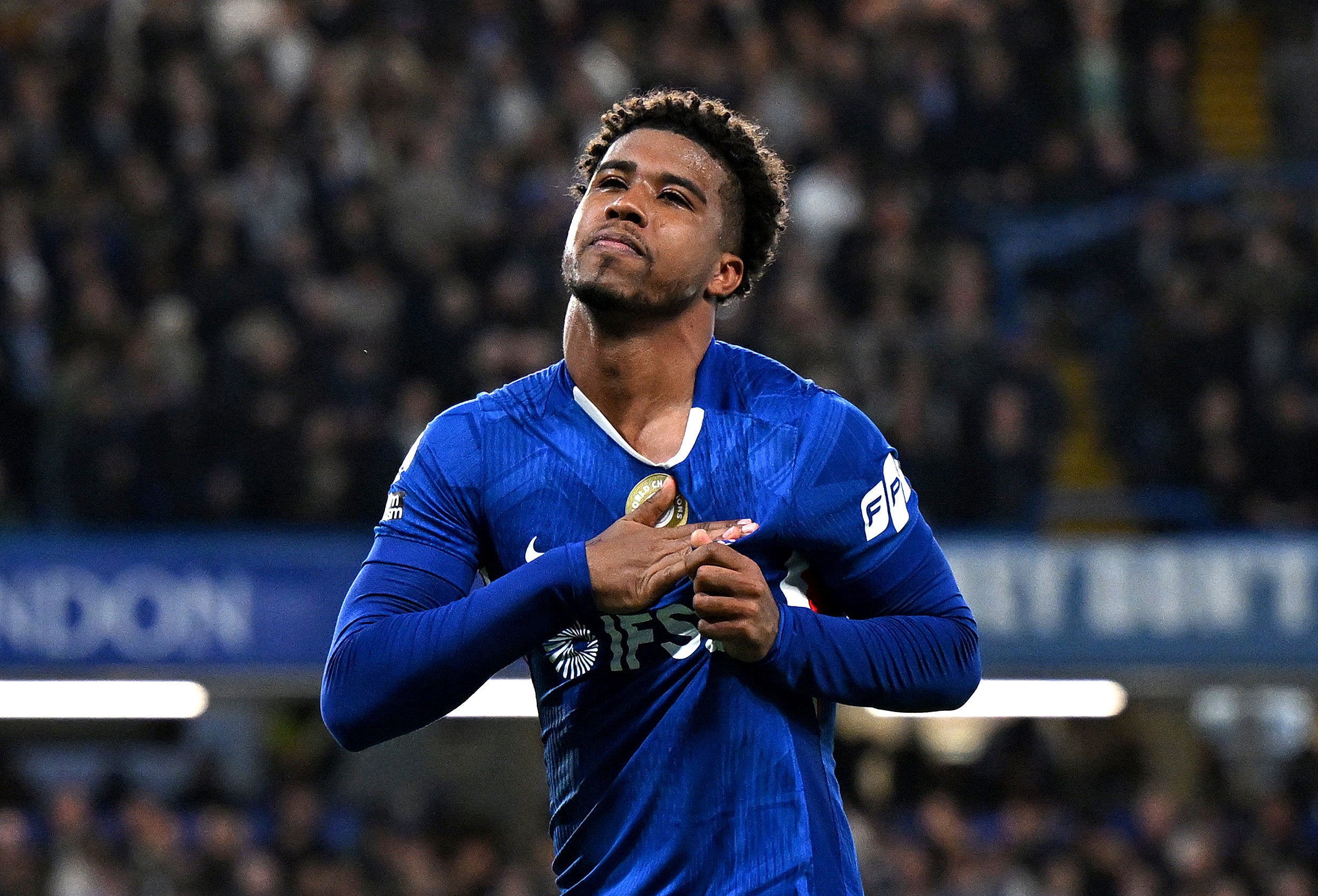
United’s refusal (or inability) to sanction deals for Elliot Anderson, Mateus Fernandes and Aurelien Tchouameni, all of whom ranked higher than Santos in United’s list of midfield priorities at the start of the window, piles added pressure on the Rio De Janeiro-born midfielder to hit the ground running in a Red shirt. So is he up to the task?
Early Years Development
Santos, throughout his journey to United, has benefited from immersing himself in three rich footballing cultures. His early development took place at Brasileiro Serie A side Vasco da Gama, where he’d break into the first team as a teenager and impress enough that in January 2023, Chelsea would make their move, signing the young midfield star for a total fee of £18 million, including add-ons.
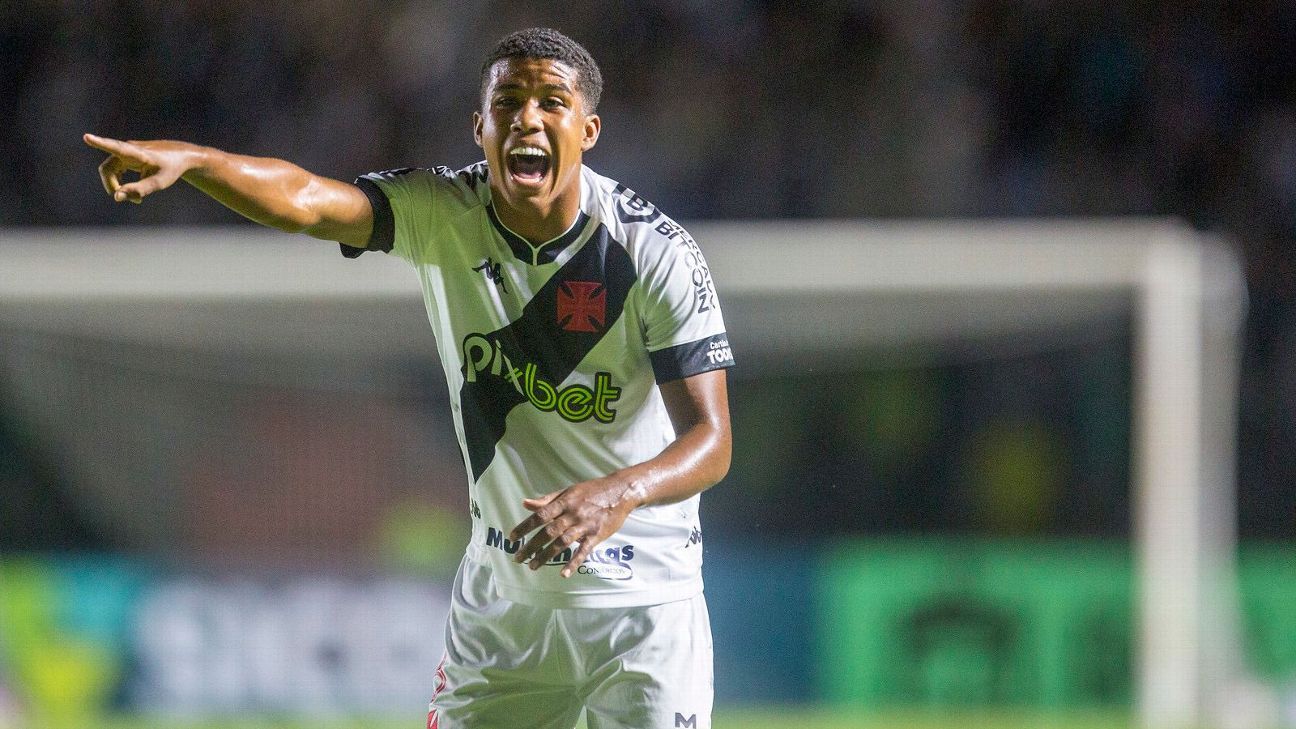
Game time during his early life in England proved hard to come by though, with marquee midfielders Moises Caicedo and Enzo Fernandez blocking his path, and an initial loan spell at Nottingham Forest yielded just two appearances in five months before Santos was recalled by Chelsea. A subsequent loan at BlueCo-owned club Strasbourg for the remainder of the 23-24 season would prove more worthwhile, with the Brazilian youngster finally finding his feet and evidencing the talent that first earned him a move to Chelsea.
That loan turned into the making of him, as Santos returned to Strasbourg for a full season in 2024-25, and by spring had entered discussions as one of the best midfielders in France. WhoScored rated him the highest scoring central midfielder in any of Europe’s top five leagues that season, with an average match rating of 7.35. He also led Ligue 1 outright in ground duels won, with a success rate of 71 percent, and sat among the division’s top players for combined tackles and interceptions. Ending season with ten goals and three assists in 26 appearances, Santos added a tangible output to his game to pair with the invaluable out-of-possession work, making himself a far more attractive prospect for a club like Manchester United in the process.
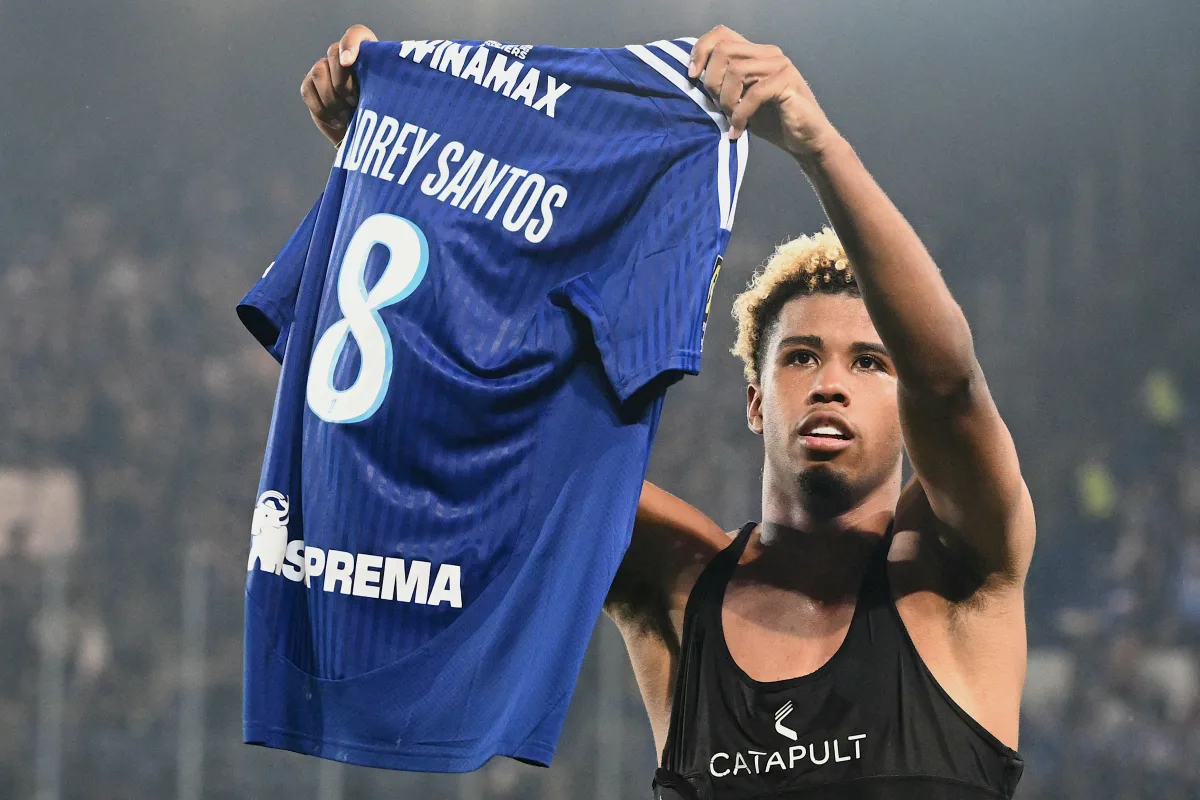
The Get French Football News’ Young Player of The Year then returned to Chelsea for the beginning of the 2025-26 season under Enzo Maresca, and made his long-awaited debut for the Blues against Esperance Tunis in the Club World Cup. He had a mixed bag of a campaign, and never quite established himself as a regular starter with Enzo Fernandez and Moises Caicedo remaining stubborn obstacles, but enjoyed a particularly bright spell under Liam Rosenior.
Despite making a positive impression in the limited amount of gametime he was afforded in London, Santos is now thought to seek a future elsewhere. A move to Manchester United who are eager to fill their barren midfield with quality recruits and provide support for the blossoming Kobbie Mainoo, makes sense.
What does the ideal Kobbie Mainoo partner look like?
A priority objective of this summer transfer window for Manchester United is to find a suitable partner for Kobbie Mainoo, who alongside the now departed Casemiro helped drive his side to an unlikely Champions League finish from the midfield last season.
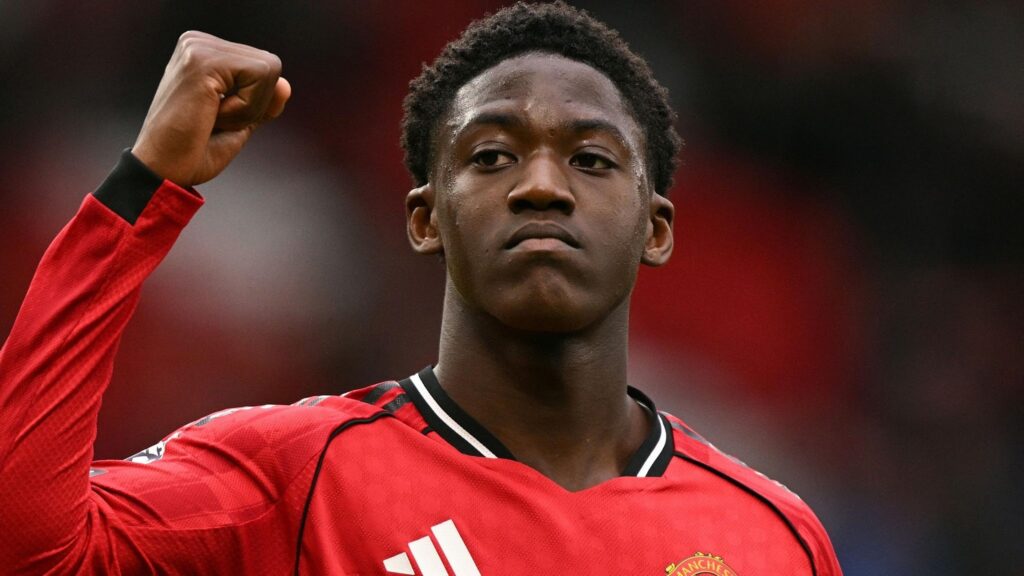
Mainoo is a carrier first. His best moments come when he picks the ball up in deep areas and drives forward, beating a press with the ball at his feet rather than with a line-breaking pass in the majority of cases. While this is a tool Michael Carrick will be grateful to have at his disposal, it also means United’s midfield can lean too heavily on one method of escaping pressure. If Mainoo is crowded out or picked off, there’s often no alternative means of progressing the ball.
Santos offers a solution to this issue, presenting as a pass-first midfielder. His progressive pass completion rate sits in the 99th percentile among Premier League midfielders, meaning he completes the vast majority of passes designed to move the ball meaningfully upfield. Where Santos and Mainoo differ markedly is in ball carrying. Santos ranks in just the 19th percentile for progressive carries, illustrating his tendency to release the ball rather than run with it, not to say that he can’t carry effectively.
The new United recruit offers outstanding defensive aptitude to pair with his stellar passing, sitting in the 98th percentile for duel success rate, the 94th percentile for successful tackles per 90, and the 89th percentile for interceptions per 90. He wins the ball back and more often than not does something important with it.
Against the bigger teams, United will likely sit deeper and defend in a mid to low block, as was instrumental to triumphs against Manchester City and Arsenal seen last season under Michael Carrick. A Mainoo and Santos pairing has potential to be effective in these games, with less large spaces in behind asking to be defended. Neither player needs to cover huge ground, and their combined security in possession and duel winning competence should help United to remain defensively robust in a compact shape.

A Viable Tchouameni Alternative?
When comparing Santos’ and Tchouameni’s statistical profiles using radar graphs composed of key selected metrics, it becomes clearer why INEOS have taken a keen liking to the Brazilian.
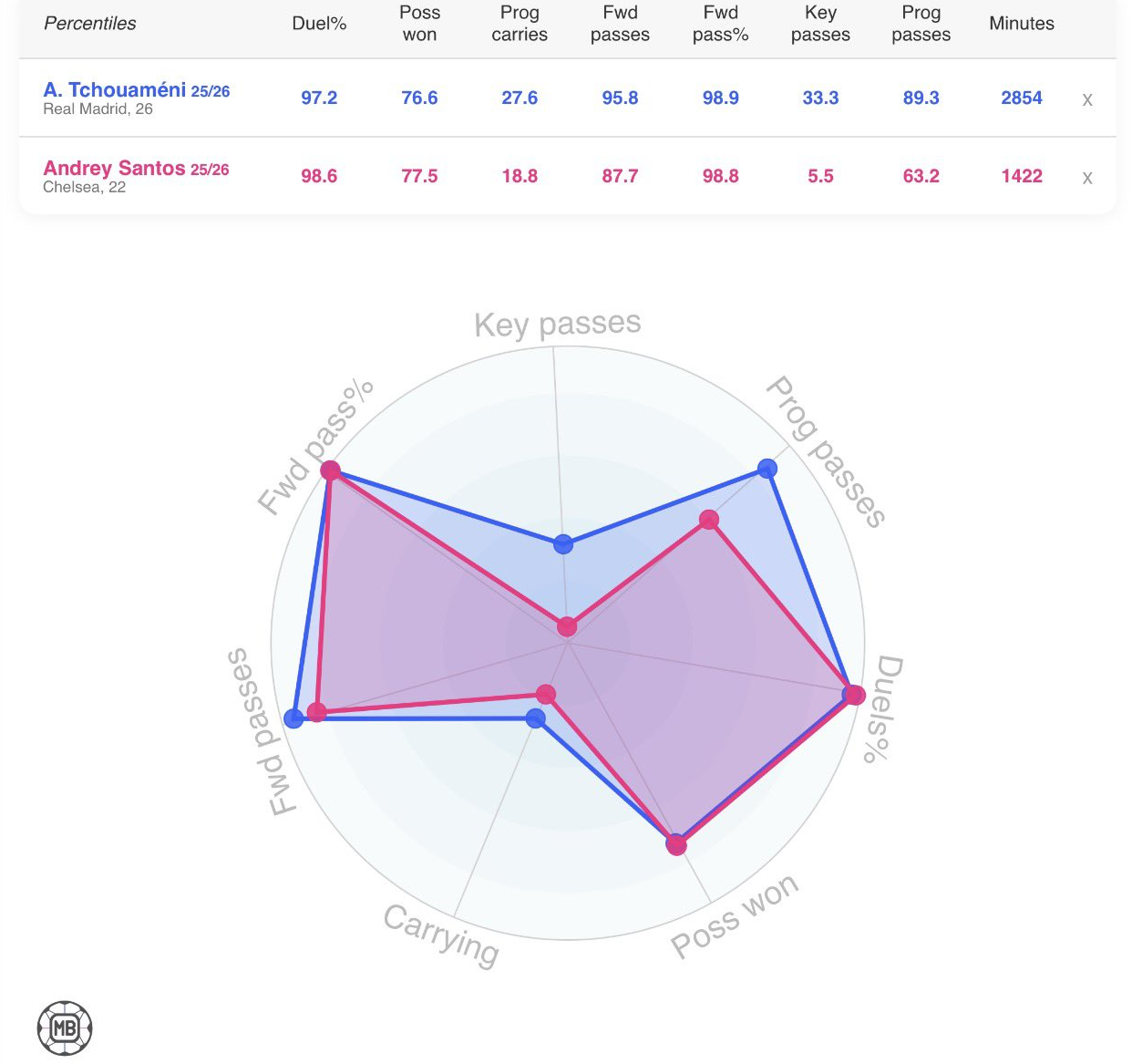
Comparative radar graph courtesy of DataMB.football
Santos presents very similarly to Tchouameni through this lens, matching up particularly closely in duel win percentage, possessions won per 90 and forward pass success rate, as well as showing similar limitations in ball carrying and key passes made.
While one would hope that United’s use of statistics is more exhaustive and less simplistic than a graph like this, it may still offer some clue as to why United have signed the Brazilian, in light of Tchouameni’s contract extension at Real Madrid.
Areas of Improvement
Santos isn’t an elite athlete in the way some of the Premier League’s top defensive midfielders are. Listed at 5’11” and 73kg, his ground coverage and top end physicality are solid, but limited, and he can be exposed in transition-heavy matches that require coverage of large spaces and a high volume of repeated sprints.
Against traditionally weaker siders, United will aim to dominate the ball and push their defensive line higher up the pitch, which leaves a lot of open grass in behind for opponents to break into on the counter. This is where United may look to pair Mainoo or Santos with a midfielder better suited to eating up ground and defending transitions, rather than relying on the two as a pair to defend in these circumstances.
Ayyoub Bouaddi and Carlos Baleba are two players who remain available for moves this summer, and while they would come at a premium, both represent ideal solutions for these games as United look to add a third midfielder before the summer window’s close.
The £50 million man also leaves something to be desired in the air, ranking in the 43rd percentile for aerial duels won per 90. Neither him nor Mainoo are imposing aerial duellists and could leave United vulnerable from a second-balls and set-piece perspective if and when paired together, given the ever-increasing emphasis on physicality now universal across the Premier League.
Another area of improvement for Santos is his long-range passing game. The Brazilian is an elite passer in the short to medium range (at least according to the numbers), but could benefit from diversifying his repertoire with more attempted long-range passes and switches of play. He currently averages just 0.5 long passes per 90 in the Premier League, compared to someone like Elliot Anderson who represents the gold standard in long passes at 1.6 per 90.
Still, none of these weaknesses render him unworkable, and at 22, Santos has plenty of years ahead to iron out any shortfalls, as well as building on his existing strengths. The instability at Chelsea, driven by a controversial ownership methodology and frequent manager turnover has made it a difficult place for any young player to develop well as of late. With this in mind, Michael Carrick and INEOS will hope that their investment is looked back on as representing great value in a market that has entirely lost touch of realistic player valuations.
Related posts:
 Brentford 3-1 United: The Beginning of the End for Ruben Amorim?
 Tottenham 2-2 United: Reds Rescue Last-Gasp Point in Chaotic Clash
 Crystal Palace vs Manchester United: The Preview
 Leeds United vs Manchester United: The Preview
 Arsenal vs Manchester United: The Preview
 Manchester United vs Nottingham Forest: The Preview
 Brighton 0-3 United: Brilliant Bruno Inspires Reds in the Sunshine
 How JJ Gabriel became Manchester United’s Youngest Ever Player
 Manchester United Advancing in Talks to Sign Leicester City Midfielder Louis Page