
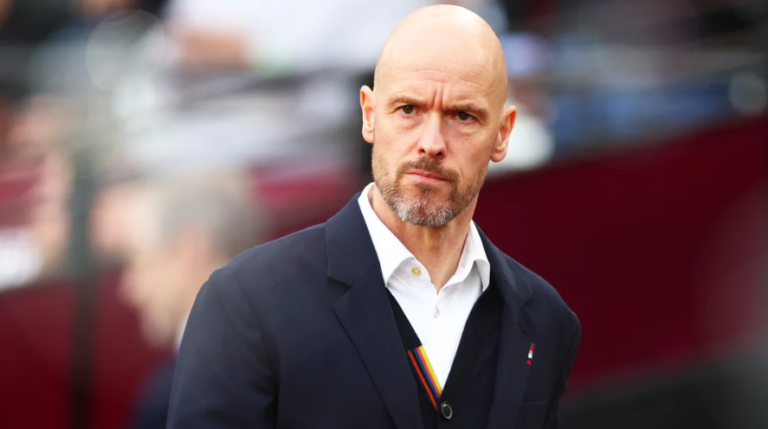

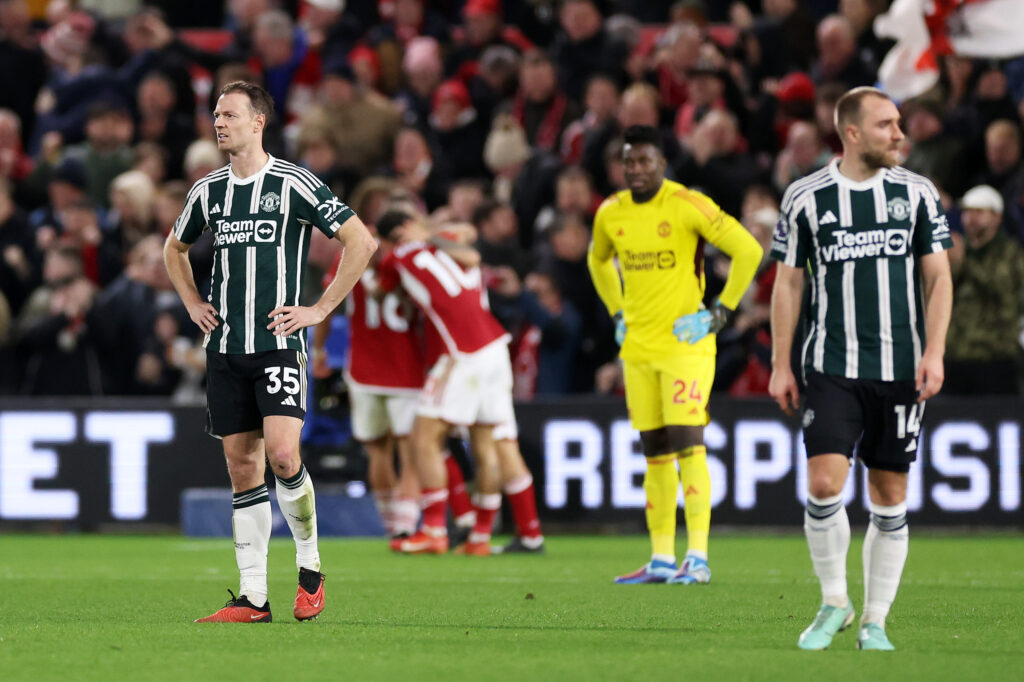
United rounded off the year with a 2-1 defeat to Nottingham Forest, against the backdrop of mounting pressure and ownership changes following the much discussed minority stake purchase by Sir Jim Ratcliffe. The loss was as predictable as was the manner of the goals conceded. Two more from cutbacks across the edge of the box following another baffling substitution – this time Scott McTominay was brought on as Kobbie Mainoo left the field at half time. This was a change Erik Ten hag has said was for tactical reasons and he didn’t regret making it, even though Forest ruthlessly exploited the void where Mainoo may have been stationed, and the ball was delivered into the area by the Former united man Anthony Elanga.
This brings us nicely around to the first of the two the key roles and responsibilities of a Manchester United Manager.
Tactics
The 4-3-3 possession-based game favoured by the Dutch and Spanish coaches and developed from the Total Football of the legendary Ajax teams is known as Juego de Posicion, or Position Game. The same basic principles were employed by Louis Van Gaal, and we know how that ended up at United; he was accused of being too slow and rigid in his shapes. The issues with his appointment were compounded when we hired Mourinho, who based his ideas on having less of the ball, and then to Solskjaer, who wanted to attack and retain possession.
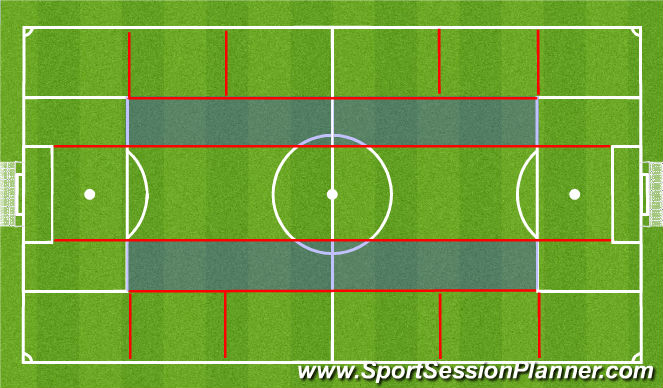
Pep Guardiola’s training pitch
Pep Guardiola divides the pitch into segments and limits the number of players in each area. The ball is always circulated in a manner where it goes through the zones forming triangles. These are flexible and the players will move into different areas where their roles will change to suit the area on the pitch, maintaining short passing combinations. The ball carrier is intended to have multiple passing options and the triangles are expected to be doubled up to form diamonds. This is helped by having no more than three on a horizontal line nor more than two on a vertical line. The rotation of the ball is designed to enable progression up the pitch to create attacks and outplay the opponent, drawing them in the create space. (Juego de Posición – A short explanation)(spielverlagerung.com)
To achieve this, there are a number of formations that the team will move through in the varying phases of play.
However, we typically see teams line up at the start of a match in the ‘out-of-possession’ shape. Most top teams will try to play out from the back of Pep Guardiola’s training pitch and adopt their favoured shapes as they build up the attack, with most teams employing a three player “rest defence” that is translated from the German word Restfeldsicherung (spare field coverage) and essentially translates into players stationed in the defensive spaces to prevent counter-attacks. Most teams will set up with three in the defensive line, two or three in the midfield line and four or five in the forward line. (3-3-4 or 3-2-5) to create offensive overloads as the ball is progressed through the thirds into attacking areas.
The shapes are often asymmetric and individual players will fulfil different roles. Despite Ole Gunnar Solskjaer’s inexperience and ‘feel-good’ management style, that United side were very good exponents of this system starting in a basic 4-2-3-1 shape, which would morph into a 3-3-4 shape as players moved into different areas of the pitch.
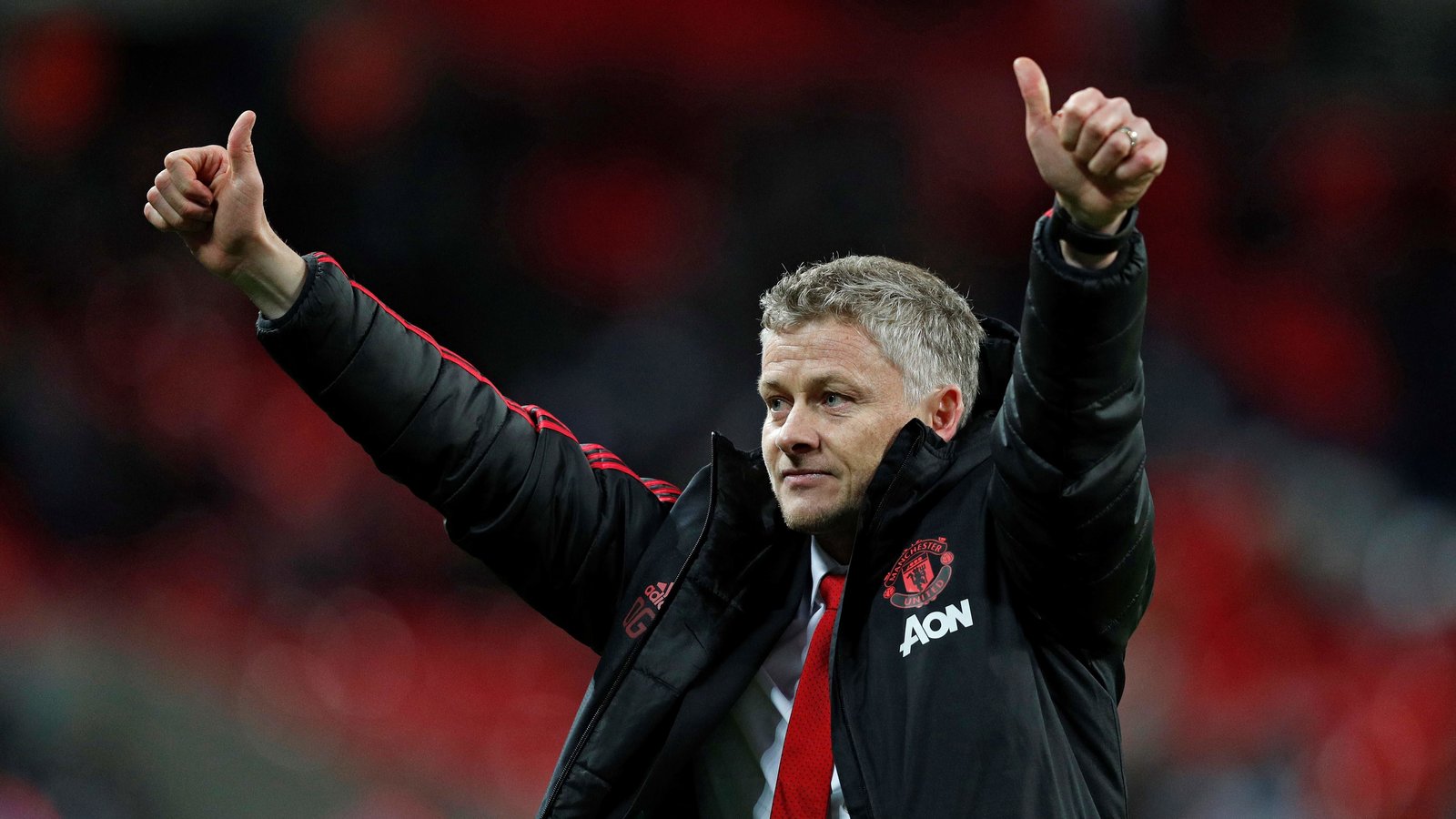
Was Ole a tactically under-rated manager?
Maguire stepped into midfield as Shaw overlapped, Fred would drop into the defensive line as the left-sided player with Lindelof & AWB making up the three. When moving from the opposite side the pattern would reverse as McTominay dropped into the back line on the right, Lindelof and Shaw stayed back and AWB progressed, often inverting into midfield with Fred.
This system was very successful and led to United scoring lots of goals and going deep into competitions. The key element to the system was it was generally compact from back to front as the defensive line was high and the press was essentially based on cover marking and winning the ball back in the middle third, allowing space for the fast players to exploit using quick passing and dribbles to enter the opponent’s box at high speed.
This didn’t work all the time, and it was poor squad depth and recruitment that eventually saw the end of Ole. Ten Hag uses a very similar system, however his preferred attacking shape is 3-1-6 and the make-up of his rest defence is often the two central defenders and Luke Shaw, with only one player in the pivot role. Last season this was Casemiro and in recent weeks it has been Mainoo. Key differences, aside from the basic shapes, are the press is high and disjointed from the rest of the team as the defence sits deeper, and it has an inherent weakness in the single pivot. This causes two main issues: the passes into forward areas when we have the ball tend to be direct and aerial, leading to forwards receiving the ball under pressure, having two or three players to beat and struggling to bring team-mates into the game, and secondly, leaving the team exposed on the transition. This can be seen in the low goal scoring output of Ten Hag’s team and the leaking defence.
Casemiro was in good form last season but still had disciplinary issues exacerbated by the number of last-ditch tackles he made, due to being outnumbered in defensive situations, although the deep lying CBs last season helped that somewhat. United have never been a particularly good exponent of the Guardiola fouls high up the pitch to stop the transitions under OGS or Ten Hag.
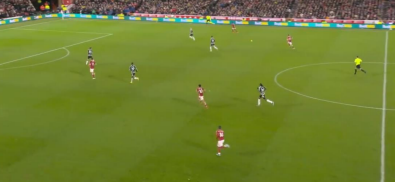
Build-up to Forest’s second goal, notable for the gaping midfield hole…
The recurring theme that has developed as a result of this structural weakness, is we are easy to counter on in defensive transitions, the low cut-back is Kryptonite. The ball almost inevitably goes in our net – the two goals conceded against Forest were as a result of low balls across the face of the box and it was a clear tactical ploy. Onana has made significant errors, and can be weak in the air, but has been largely blameless for this type of goal, as he was against Forest. At the other end of the pitch, while we win the ball back fairly high, we are predictable, slow and pedestrian, and create comparatively few chances in each game despite committing numbers forward.
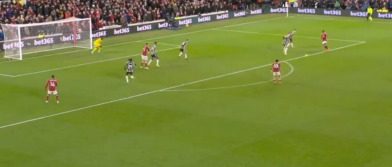
…with former Red Anthony Elanga getting the better of Diogo Dalot to lay it on a plate for Morgan Gibbs-White
The Forest defeat came with United holding the upper hand in the xG, 0.70 vs 0.76 in the away team’s favour, and this is perhaps indicative of the structural weaknesses in the shape – shots from the zone where forest scored from are typically defended with intensity and numbers. Both goals came down Dalot’s side, the second from a well-worked counter attack. As the ball is progressed through the centre of the pitch, the gaping hole in the middle of the pitch is there for all to see.
A viable alternative?
United’s goal was from a Matt Turner mistake where Garnacho capitalised and played a delightful reverse pass into Rashford to finish first-time. In the game before Forest, our forwards had a rare good day last time out versus Villa, and the enforced absence of Hojlund led the manager to reshuffle and recall the dropped Antony with Garnacho scoring twice from the right, and Marcus Rashford having his best game in a long time from the left. With this in mind, was there a need for a central striker in the 1st place? Bruno could play a free role in the #10 position with McTominay providing a physical threat, leaving two central midfield positions to fill the often-exploited hole.
Who would be available for selection in those deeper roles is up for debate, but a similar system has been used to good effect by United in the past and Liverpool used Firminho in a withdrawn false nine position. United have spent a lot of money on Rasmus Hojlund, but with a relatively goal return and too many games passing by the young Norweigan, is there an argument to change the current system and drop him, or change his role?
Time will tell – but the current system isn’t working. Erik Ten Hag has shown that he is a principled manager that doesn’t change his mind easily. But stubbornness can quickly turn to dogma, and in the blink of an eye, another season passes with no silverware.