

The world seems a different place since last time since anything with greater depth than off the cuff Twitter threads or comments on United Social Media groups has been shared. Many any of which are attempts at humour, but there is usually considered opinion amongst them. It might not seem like it on the surface, like all fans there are many over reactions to good and bad; hyperbole and rose tinted glasses go hand in hand in football. As fans we must accept that we form opinions based on incomplete data and unqualified analysis, often influenced by the media.
Sky allow some of their pundits to share some bizarre opinions. Sadly, Sky are not the only ones with terrible, ill thought out opinions designed for a reaction, which in turn generates clicks and cash. Part of the reason these articles came into being was to counteract some of the nonsense spouted online, and redress the balance in some small way, while also reducing the number of angry twitter exchanges with Player FC accounts. Most of these accounts are clearly trolls and judging by their interactions, there are plenty of people taking the same bait.
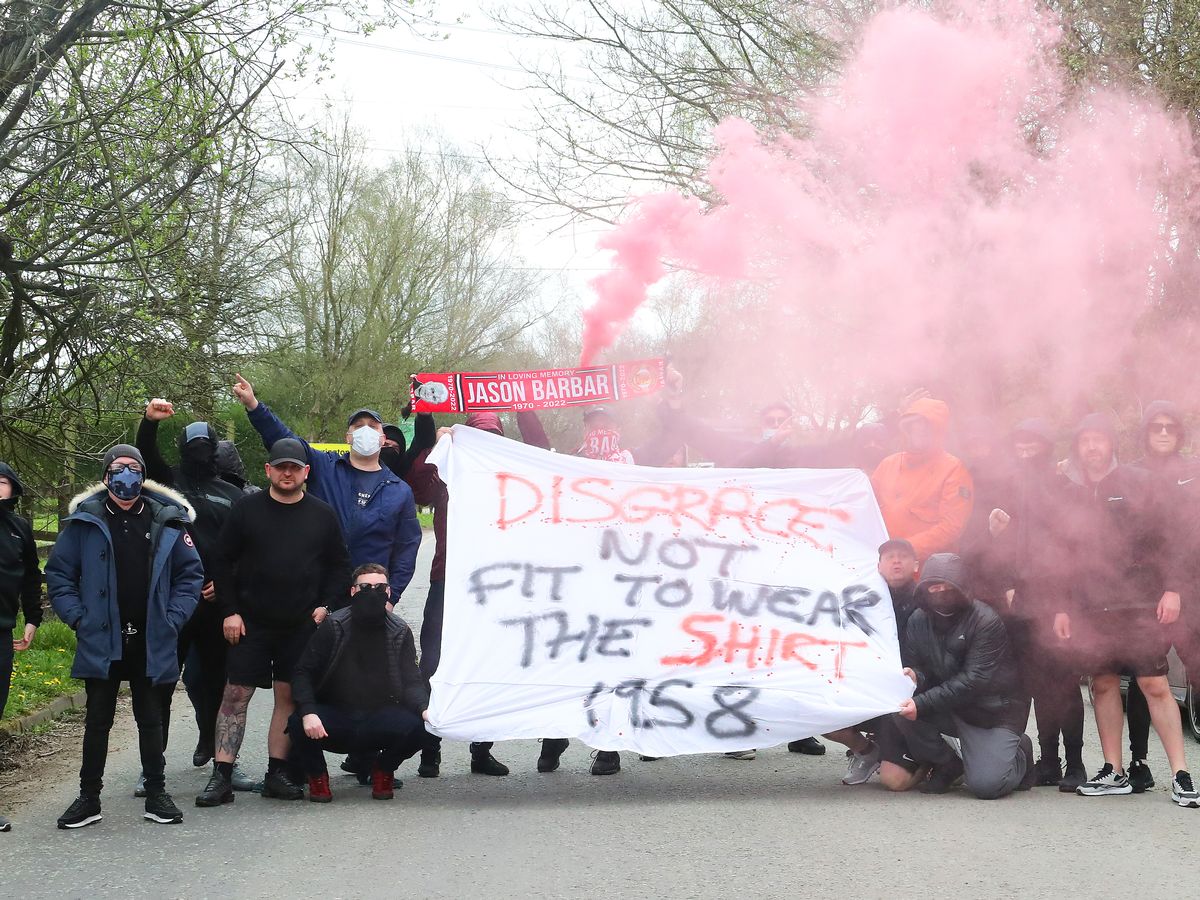
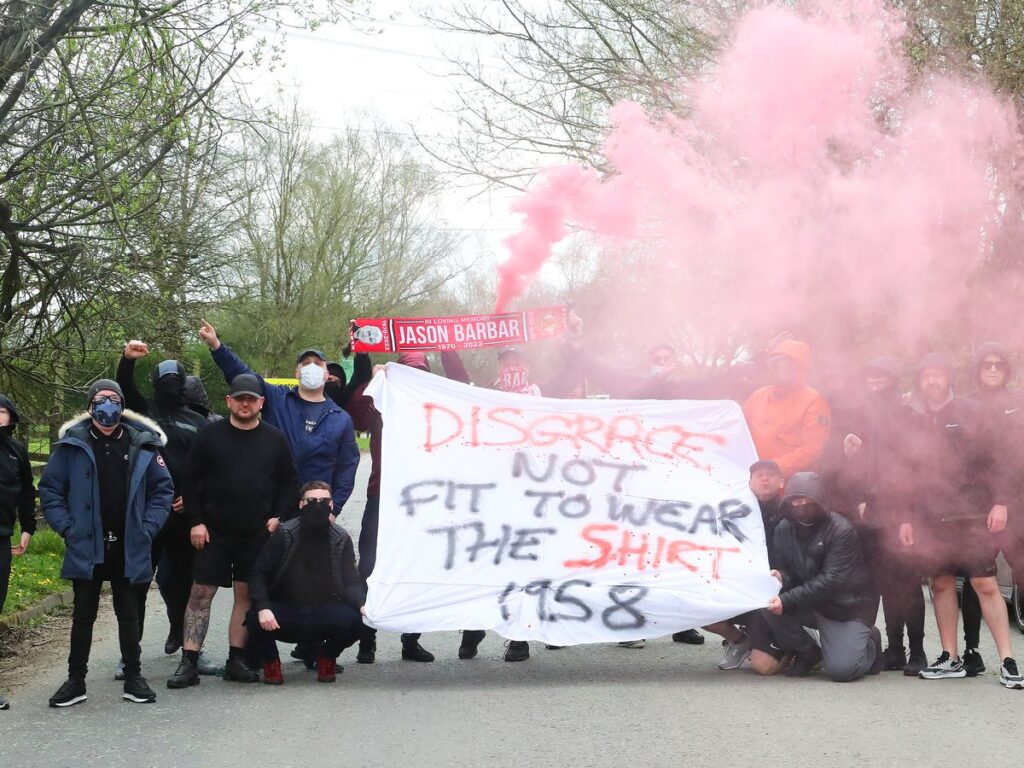
Much of the anger online is justified by the poor performances of Manchester United Football Club on the pitch. There are plenty still angry the last two words were dropped from the crest. In truth the current owners of Manchester United see the football as little more than a distraction. Their continued lack of engagement has brought renewed anger amongst fans which has seen protests at Carrington and recent matches, the two teams currently going head to head for the top prizes has no doubt crystallised protests as well as the near permanent #LUHG hashtags that anger renewed
The anger is centred around The Glazers ownership model that has seen little investment in infrastructure. United are not training on the local Primary school fields, but Carrington has fallen behind Premier League rivals. Spurs have a new stadium and the Scousers are due to start work on another new stand at Anfield. Old Trafford is falling into disrepair; little more than essential maintenance work has been done over the last seventeen years (the quadrants were already planned when the owners turned up).
The much vaunted new online ticket/turnstile combo is a farce. There have been visible issues at most home games this season and things don’t get much better in the ground. The card only kiosks are slower than a week in Strangeways and food is worse. The fact that both systems are internet dependent and there is no Wifi at Old Trafford is the most United thing ever. Or to be precise, The Glazers’ Manchester United. Considering they are business people, the concept of maximising revenue via investment seems lost on them, but it is perhaps a fitting analogy into their Dog in the Fog stewardship of the club.
Football Finances
There are others more suitably qualified to talk about the finances and infrastructure of the club, and there are certainly more qualified individuals capable of talking about the football performances on the pitch. However, too many of them seem intent on throwing blame around and pointing fingers, without actually getting to the crux of the issue. It always comes back to the Glazers and the now infamous “No value in the market” quote from Ferguson who signed a knackered Michael Owen and replaced Ronaldo with Antonio Valencia. He turned out to be a great servant to the club and became a brilliant right back. The positional shift later reprised by Ashley Young on the opposite side. Both symptomatic of the make do and mend approach required over the past seventeen years.
The club spends money. It is undeniable, but the method is scattergun at best and has left a succession of managers with a blanket too short for the bed. The owners smoke and mirrors sees them cut a 2 foot strip off the top of the blanket and sew it back on the bottom. It seems to dazzle the pundits and plenty of people harp on about the spending, but fail to mention the revolving door and litany of failed vanity signings. It was only under Solskjaer that there seemed to be any sort of planned building until summer. Another blockbuster, and ultimately unnecessary, signing was the unwitting catalyst for team implosion and subsequent managerial sacking. The oft repeated line “any other manager wins trophies with this squad” was trotted out and proved to be nonsense. In the end it was difficult to watch bona fide club legend being mocked left right and centre along with the “individual brilliance” and “no style of play” and the supposed lack of “tactical acumen”. The interesting part is, whenever any of the people spouting this rubbish are asked, none of them can explain how the team should play in any detail. Solskjaer was flexible, and used two or three systems to great effect. We played through the thirds in a generally attacking style. This allowed flair players to take risks and get fans off their seats. A detail lost on many. It wasn’t perfect, and the journey back to the top of the hill was never going to be linear, it never is. Context is key to understanding this. It was a long term plan and the job wasn’t finished.
Solskjaer came into a club that was a mess behind the scenes. The academy drifting, with a pathway to the first team almost broken. Mourinho’s transfer strategy was slash and burn, vast sums were wasted on the likes of Zlatan and Sanchez while he binned the analysts. Jose’s footballing approach was at odds with LVG’s possession based game, preferring to cede possession and a particular profile of players was required for his pragmatic style. Van Gaal’s team were boring, but if the club had omitted the Mourinho phase, perhaps things might be better now. However, given he was the last manager to win any silverware his fanboys won’t admit it. Either way he’d be long gone by now, his career path is very similar wherever he has been and his star is almost certainly on the wane.
Solskjaer’s brilliant interim run saw him handed the job on a permanent basis. He began shipping players out, the list was many and varied. Some went on to success, but in the main fans were in agreement with who was shown the door. Incoming players were, at the time of signing and up to the end of last season, high performing mainstays of the team. Though many are now relentlessly targeted for online abuse, led by certain anti cheerleaders!
Context
Context is key to understanding how circumstances are perceived. For Ole, the narrative of “bottled” big games and failure to mount a title challenge were framed as his failure on the back of £400 million spent on transfers. Fees that were generally inaccurately reported to paint the manager in a bad light. Two young players are unfairly lumped in with this in Diallo and Pellestri. A couple of kids signed on heavily incentivised deals on transfer deadline day. United sign young players all the time and the timing of their signings has put unfair pressure on them both as fans were expecting Sancho to come in. Not every young player will make it at Old Trafford but to use this as a stick to beat the former manager with seems ludicrous. Particularly when the current interim/consultant manager is an advocate of such signings. Amad has recently shown his undoubted quality with a couple of G/A’s for Rangers & the FA Youth Cup win was perhaps the green shoots of recovery for the Academy. OGS will get no credit, nor ask for any. His work behind the scenes was a precursor to many of the recent changes.
The first team needed more signings and the fact we are still reliant on players from the Ferguson era speaks volumes. Either way there was a clear plan in place, the big earners were moving on. Pogba would undoubtedly be gone had Covid not hit and De Gea would be the last one. The young, vibrant team had options in every position aside from central midfield and the upward curve seemed set to continue.
The hectic schedule United played over the two lockdown affected seasons has undeniably affected many of the players, and performances have suffered. United were at a physical disadvantage to almost every single opponent throughout the whole of last season. The rescheduled match after the protest ensured that was also the case for the Europa League Final as well. The number of matches wasn’t necessarily the problem. The seasons shorter duration meant fewer days between matches. Thus, less time on the training ground working on tactics and shape. The weak squad meant fewer players were rested. This goes back to the number of signings the owners allowed, and of these signings the number of starting players amongst them.
After successive top four finishes and decent cup runs it felt like progress. However last season culminating in a cup final defeat left a feeling of disappointment. OGS lost his job after some awful results and performances. There was a sense of inevitability about the axe when it was eventually swung, although it seemed a sad end. The “any other manager win’s trophies with this squad” maxim soon turned out to be hilariously misguided as Wreck It Ralf set up like a kid’s first season on football manager.
This summer saw the return of Dalot and Lingard, players deemed surplus to requirements and after Dalot’s run of recent matches it not difficult to see why. More mid-season Maldini than Pre-season Pirlo, but equally as useless as the erstwhile Andreas Pereira. Lingard had personal issues and his United career seemed to have run its course. Perhaps his personality was as much part of the problem, rubbing many reds up the wrong way on Social Media? Wayne Rooney mentioned him and Pogba dancing the morning after a defeat. In his pre-match interviews Solskjaer often spoke of focus and engagement, maybe a telling sign. In an article with The Training Ground Guru, Sir Clive Woodward discusses squad members as “Energisers” and “sappers”. He arranged some training with the Royal Marines and this was taken from their teamship culture working life. He went on to say “in high-pressure combat situations just one negative trait can destroy a whole team. One wrong team player can sap the energy from the whole group.” One bad apple and all that?


A lot of Scientific Management principles can be transferred into football settings; the ideas are fascinating. There are various studies into Change Management as per the Kotter & McKinsey Theories shown here. When attempting any sort of change, group buy-in is key to avoid slipping back to the old ways. Part of preventing this happening involves getting the right character traits into the organisation. In this case Manchester United. OGS spoke of cultural resets, removing blame, taking it away from individuals and creating a team dynamic, ensuring a positive environment to enable hard work. There were many behaviours deemed non-negotiable, including the return of the club suits. A small but important detail. With this in mind it is worth considering the Glazer’s Commercial model. Sponsors logos adorn everything. The clicks and engagements of fans is the selling point. To assist them in reaching a greater audience they use a certain profile of player to help. These vanity signings do not work on a footballing level, but they persist with the strategy nonetheless.
As much as certain people won’t like to admit it, Solskjaer did a good job and deserves more credit for things on and off the pitch. Particularly when the two top teams are so well managed from above to enable success on the pitch. OGS put the wheels in motion for many of the ongoing changes at the club. The information is out there if anyone would like to do some cursory research. When Jose said his 2nd place finish was one of his greatest achievements because of the mess behind the scenes, LVG and Moyes bemoaned the lack of backing. Perhaps it might put Ole’s work into context?
The Season Unravels
Hopes were high at the start of the season a title challenge anticipated by some. The sensible didn’t expect that, but didn’t foresee the season falling apart in the manner it did. So what went wrong and how did it cost OGS his job?
The continued sniping and disrespect of the team and the manager certainly didn’t help, and as the Europa League final was perceived to be an abject failure, Manchester United were overwhelming favourites, especially in the English Press. However, leading up to that game United played three matches in five days and had 24 hours less preparation time. In the immediate build up, United beat Wolves away on the 23rd of May, whereas the Spanish FA assisted Villarreal by bringing their game versus Real Madrid forward to the Saturday evening. Their Champions League Semi Final appearance this season showing they were no mugs, and the pitfalls of an ineffective goalkeeper in big moments.
At the end of a gruelling season in unprecedented circumstances perhaps it was enough of an advantage, even if it was more mental than physical. United lost on penalties, the keeper was the fall guy amid reports he ignored coach’s instructions for in the shootout missing his own. Ironically had Dean Henderson not been struggling with a pelvic injury, he may not have been selected.
Another season empty handed although this was only the seventh European Final in Manchester United’s history, the lowly rank of their opponents didn’t help the perception. It seemed as though De Gea’s time was up.
The new season began in optimistic fashion as Marcelo Bielsa’s tactical brilliance came to Old Trafford for their annual pasting. Managing a marginally improved result by only conceding five goals to OGS’s counter attacking individually brilliant reds. Raphael Varane was introduced to the Old Trafford crowd and Dan James started the match. Jadon Sancho was in the bag with rumours of Kieran Trippier and Ruben Neves coming in to augment the midfield. The signing of Tom Heaton was perhaps an indicator of forthcoming change in the Goalkeeping department. Lingard & Dalot returned from their respective loans, but would almost certainly be off to pastures new. None of those things happened. You know who arrived and James was off to Leeds. The composition of the squad altered and perhaps the players bombed out on loan and the ones coming in were not the energisers required to maintain squad cohesion. Were incoming signings Energisers or Sappers?
The Data Revolution
The world is controlled by mathematics whether we like it or not. Data Analytics in football as we see them today are a relatively new thing, but they are here to stay and can be used to predict everything. When negotiating his recent contract renewal, Kevin de Bruyne used Data Analysis to predict his importance to the team based on the current squad. City rewarded him with a huge pay rise. They have developed a rather annoying knack of winning trophies over recent seasons, so perhaps there is something in it?
Statistics can be misused or misrepresented. However, used correctly in conjunction with other data sources can be a valuable tool. Liverpool have been using data analytics as part of their “transfer committee” since 2015 and they have developed some annoying habits. They get the majority of their recruitment right; players are signed who suit footballing needs. United didn’t appoint a head of Data Analytics (Dominic Jordan) until October 2021 when other teams were already streets ahead. Although United do have real time data available in the Manchester United app, they are quite detailed and perhaps more detailed information is available to the manager.
The name Matthew Benham probably doesn’t mean much to those outside Bretford, but he was central to the FC Midtjylland data revolution. He made his money as a professional gambler after using statistics to create his own betting exchange. The club owners suggested a radical new approach. They would measure performances against expected points and expected goals. Analysts recorded every conceivable piece of information, passes, shot types and distances along with set piece information. This was the same for the opposition and then the information would be presented to the coaching staff in a user friendly manner. They also set about statistical analysis of set pieces and throw-ins. Their throw-in coach Thomas Gronmermark is now at Liverpool. He set in place three Throw-in Types. Long, fast and clever along with the technique for receiving players and runs required for each type. The use of Analytics in sport was made famous by the Moneyball novel and subsequent movie. Billy Beane and the Oakland A’s used data to find value where it hadn’t been seen before.
The genie is out of the bottle and the analysis is becoming more refined. Each metric is studied in conjunction with the other and better understanding of players are possible. Goalkeeper is a key position, and this has always been recognised, and the stats easily recorded. Saves, punches, and high claims are traditional recordable metrics. The role of the goalkeeper has now encompassed the “sweeper keeper” role made famous by Manuel Neuer and for those of a certain age eccentric South American keepers of yesteryear like Rene Higuita. The better teams and better goalkeepers now operate almost as auxiliary Centre Backs with the ball, often as playmakers and are expected to sweep up behind the super high lines required as high pressing means the game is played in the opponent’s half of the pitch, football is becoming less of an invasion game and more of a territorial occupation!
There was a gap in the statistical analysis techniques of the modern goalkeeper. John Harrison developed his own analytical model to understand the importance of each attribute and to enable a number to be placed against them.
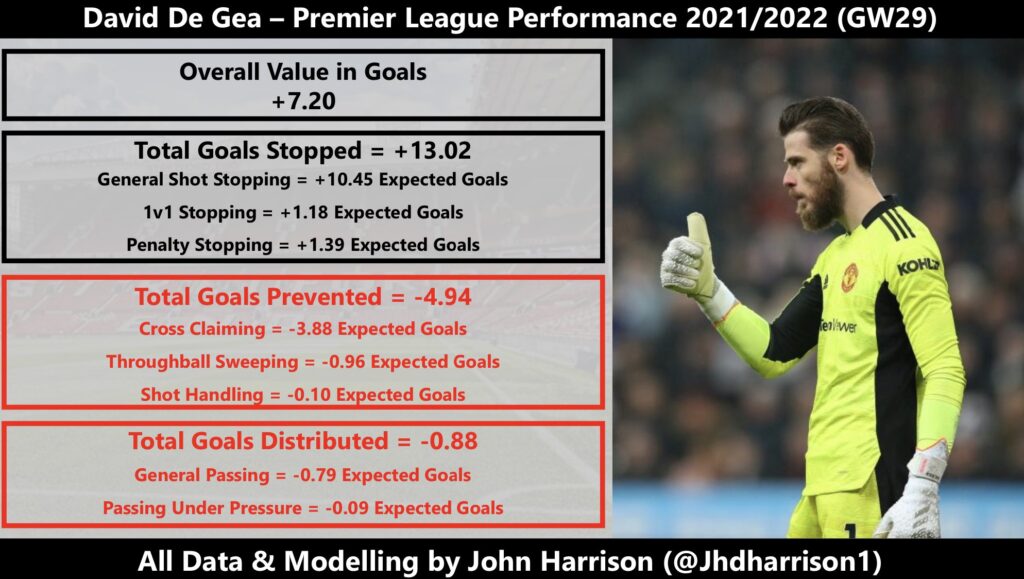
From the basic Premier league statistics, available from the website, David De Gea doesn’t score particularly well in comparison to other keepers on high claims, punches, and sweeper actions. He scores well on the number of saves, but wasn’t in the top five in a recent save percentage statistic.
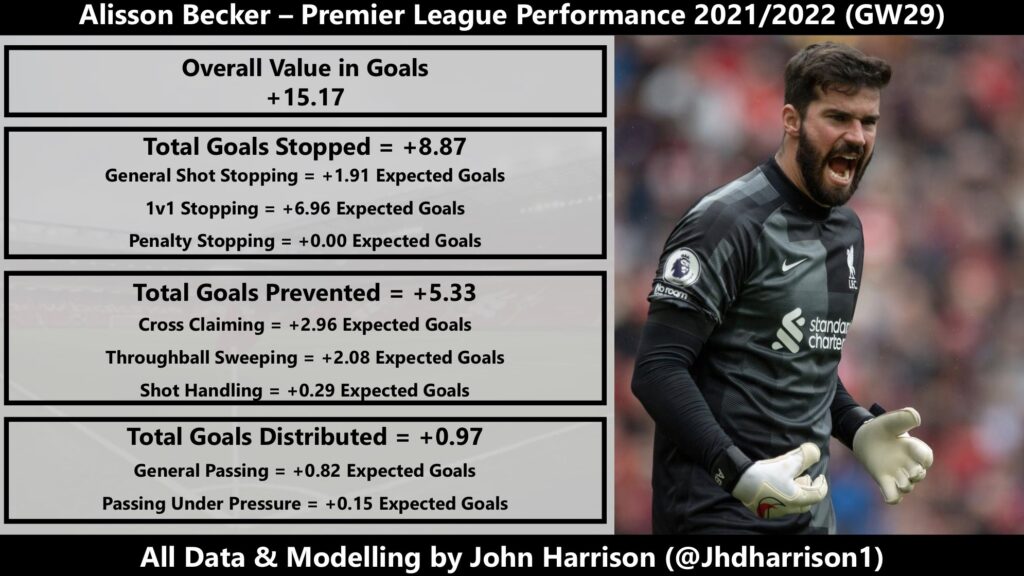
When compared with Ramsdale and Ederson, recent stats show he was the best shot-stopper up until that point the negative contribution in the other categories rendered him the lowest of those three overall while still being a net positive vs if United had an average Premier League Goalkeeper but obviously United would certainly be in trouble if they had a below average Premier League Goalkeeper.
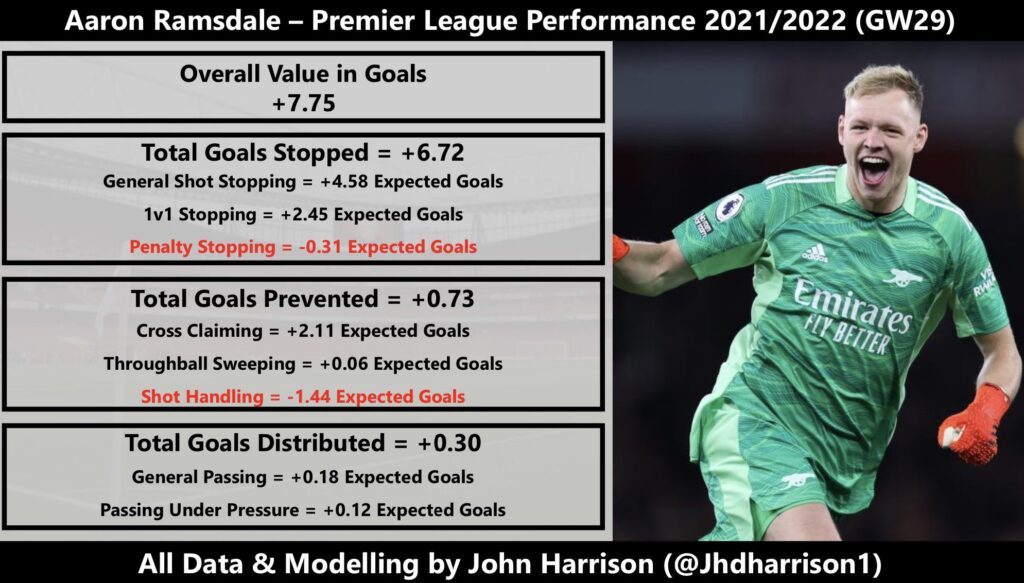
These stats clearly demonstrate the importance of a Goalkeeper in the modern game and the need for them to be more than just a one dimensional shot stopper. De Gea’s numbers make less impressive reading after some recent performances, questions need to be asked on his inability to be proactive and affect the team. Confidence and belief are everything in football. If the players know their keeper is not helping them, and certain individuals are taking the flack, is it any wonder the group is so fractured?
Add this to the changing dynamic where an aging superstar comes in, demands the team is geared towards him scoring goals while doing no work off the ball. In a team that had clearly identifiable weaknesses, is it possible that this could have contributed to the current predicament the team finds itself in?
How can this group go from the most likable team in almost a decade to the most toxic group in the history of the club? The infectious energy & finishing of Edinson Cavani was replaced by the arrogance & petulance of Cristiano Ronaldo. He has scored goals but at what cost? During his time at Juventus he scored lots of goals, but others scored fewer. This also happened at United & his pressing stats are literally the worst in Europe. Whatever the reason, is the timing of it a coincidence? Ajax won the title, but will Erik Ten Hag bring silverware back to United & will he do it with two of the biggest names at the club? Only time will tell.