

In each instalment of The Devil’s in the Detail we’ll be breaking down one key detail, statistic, or piece of analysis – discussing why it’s important, its effect on United and what the Reds can do to address it.
Ralph Hassenhutl’s post-match comments made plenty of headlines when Manchester United stumbled to their third draw in a row last weekend against Southampton. He said: “It’s not a big secret that when they lose the ball the reverse gears are not the best from everyone.”
Since then, it’s been a hot topic among United fans, pundits and the press, despite United picking up three points with an unconvincing midweek showing against Brighton.
An interesting heat-map style infographic from John Muller, of The Athletic, perfectly demonstrated why tracking back – especially in wide areas – continues to be an issue for United.
Why is this important?
Tracking back and working hard is one of football’s oft-discussed, highly-prized basics and the fact that opposition managers now see it as a weakness of the current Manchester United side is worrying.
While there’s more to football than hard work and tracking back, it’s also the foundation of many great teams. Currently, United are comfortably in the bottom half of the table when it comes to distance covered (TheAnalyst.com).
Gary Neville recently echoed the worries we’ve heard so many Manchester United fans voice, on The Gary Neville Podcast, for Sky Sports:
“Last season I was really complementary of the spirit, of the togetherness that the team had. Yeah it wasn’t a successful season and losing that Europa League final was a real big blow, but I felt all through that season that – finishing second and getting to a Europa League final – there was a spirit, they were tight and they were a group of people that I said I started to like. I’m now going away from that again because […] there is a few of them not putting the shift in, the hard yards and that I can’t forgive because ultimately the only thing I’ve ever asked for as a Manchester United fan is that basically they give their all on the pitch and they never give in.”
Comparing United’s inability to consistently track back – and win back and dominate the ball – to that of more successful rivals, Chelsea, Liverpool and Manchester City, helps to explain why United look so defensively fragile. It’s a point rammed home by Muller’s insightful infographic. Twin that with some defenders in awful form and United’s problems are laid bare.
How does it affect United?
Jadon Sancho, Marcus Rashford and Jesse Lingard are all immensely talented attacking players, but none of them are known for their defensive nous. At times, this makes it relatively easy for United’s opponents to retain the ball in wide areas and to apply pressure on the Reds as a result.
Paul Scholes made his feelings on United’s midfield clear following the draw with Southampton. Appearing on BT Sport, he said: “You look at United, they were all over the place. At one point Scott McTominay was left on his own in midfield, then it was Paul Pogba left on his own in midfield.
“Where Bruno Fernandes was playing I don’t know. He’s all over the pitch. The two wide players, for me they just didn’t work anywhere near hard enough.”
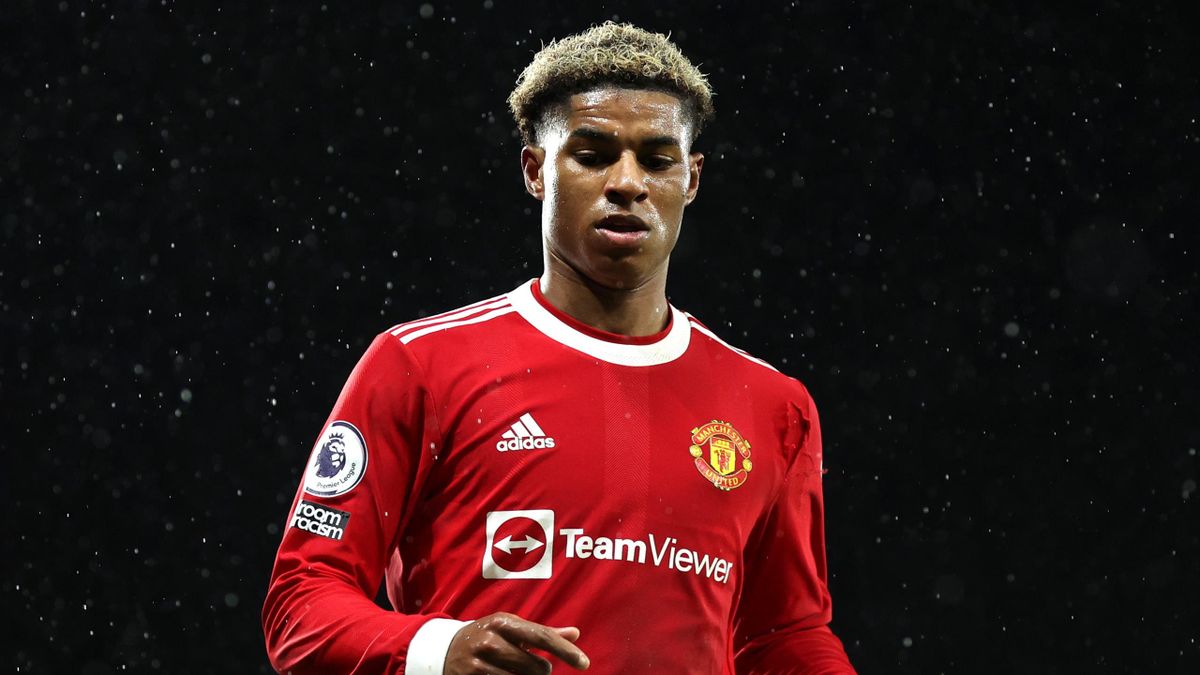
Conversely, the fact Anthony Elanga has been able to force his way into the first team picture – displacing the more experienced Marcus Rashford through sheer hard work and distance covered – shows that Ralf Rangnick also recognises this problem at Old Trafford and is looking to develop United’s “reverse gears”.
What’s the solution?
So, is the lack of “reverse gears” signposted by Hassenhutl just a symptom of a wider malaise at Old Trafford? Or a tactical shortcoming? The former seems far more likely.
It’s becoming increasingly apparent that a cultural shift is necessary at Manchester United and there’s near unanimous agreement among fans and pundits that United need to strengthen in central midfield. Strengthening will be needed across the wider squad too, with several big name players likely to leave in the summer.
As a result, it’s hard to see an easy solution for Ralf and United this season. Elanga’s introduction showed that hungry young players can help the team shake off its malaise – however briefly – and the manager may be tempted to try out more youngsters as a result. A squad shake-up could spark competition for places at the very least.
Aside from that, it’s important that the coaching staff work hard behind closed doors to build some unity and organisation in the squad. In the longer term it’s crucial that United spend more wisely in the summer and build a more cohesive team, with players that work hard for each other and the club. The club’s targets should be the kind of players that the management believe we need, rather than the biggest names available at the time. Then, we’ll be far less likely to attract such unusual – but fair – criticism from opposition managers and hopefully the performances will be more palatable for United’s ever-reliable fanbase.